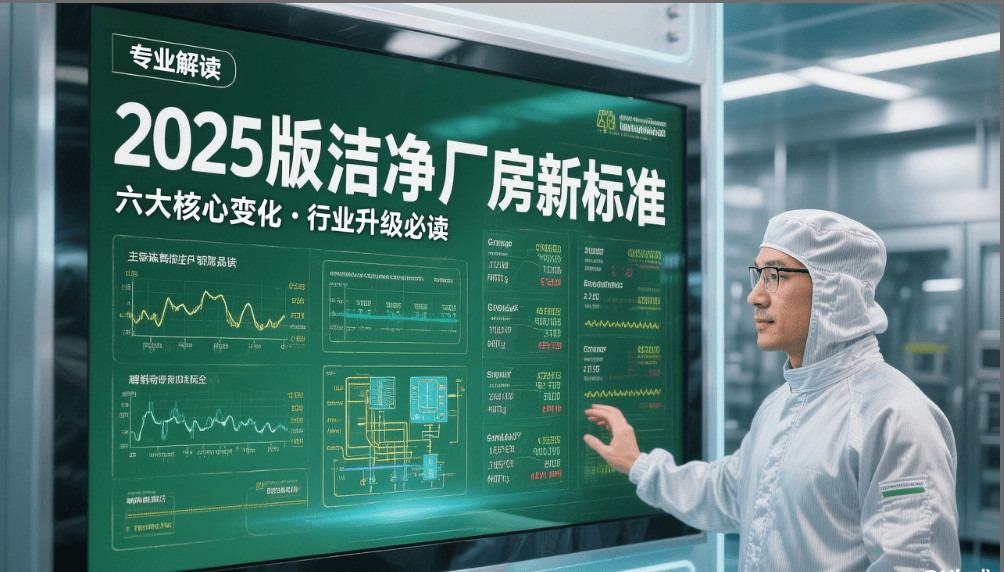
2025 Pharmaceutical Cleanroom Standard Deep Dive: Six Core Changes Leading Industry Upgrade
Background and Significance of the New Standard
On September 1, 2025, the "Construction and Acceptance Standard for Pharmaceutical Industrial Cleanrooms" (GB/TS1466-2025) officially came into effect. This represents another significant standard upgrade in China's cleanroom industry following the 2010 "Cleanroom Construction and Acceptance Code" and the 2015 "Cleanroom Construction and Quality Acceptance Code."
The release of this new standard marks China's pharmaceutical cleanroom construction entering a more refined and specialized new phase. For pharmaceutical manufacturers, cleanroom engineering service providers, and related practitioners, a deep understanding of the key changes in the new standard will directly impact project compliance, cost-effectiveness, and long-term operational efficiency.
Why a Dedicated Pharmaceutical Industry Standard?
Pharmaceutical cleanrooms differ significantly from cleanrooms in other industries:
- High disinfection frequency: Regular environmental disinfection is required, with at least two alternating disinfection methods
- Strict cleanliness grades: Involves four grades (A, B, C, D) with extremely strict microbial control requirements
- Complex processes: Involves multiple sanitary piping systems including purified water, water for injection, sterile gases, and pure steam
- Strict regulation: Must meet GMP system requirements with traceable operational parameters
The new standard addresses these special characteristics with more targeted and practical technical specifications.
Detailed Analysis of Six Core Changes
1. Building Decoration: Material Disinfection Resistance Becomes Mandatory
Core Changes
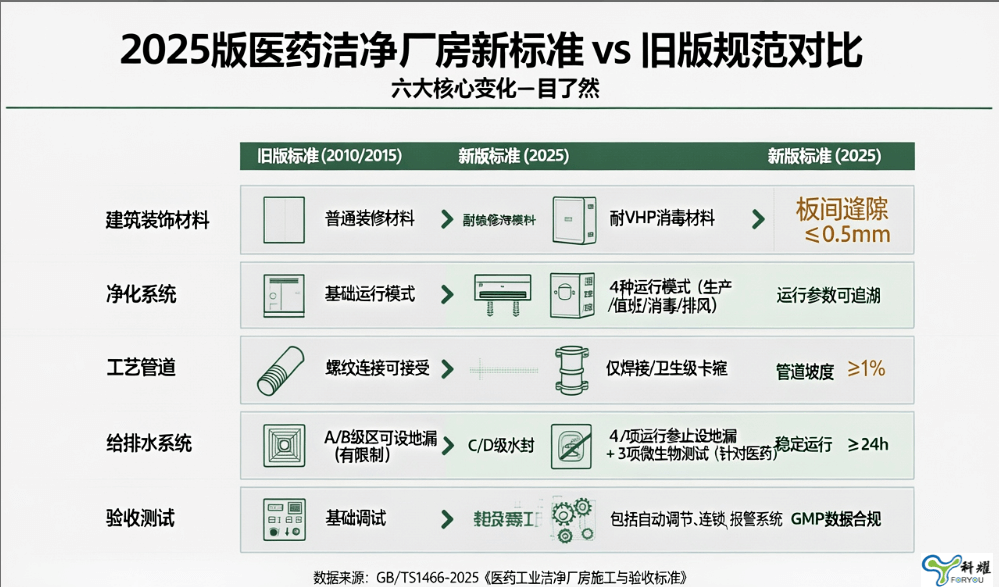
New Standard Clause 3.2 clearly states: Pharmaceutical cleanroom finishing materials should be disinfection-resistant. Particularly for cleanrooms using vaporized hydrogen peroxide (VHP) disinfection, materials should have hydrogen peroxide oxidation resistance or use strong oxidation-resistant coatings.
This change stems from practical pain points: traditional finishing materials tend to discolor, age, and develop surface powdering after repeated disinfection, affecting not only aesthetics but potentially becoming breeding grounds for microorganisms.
Enhanced Construction Details
- Sandwich panel gap control: Upgraded from "as small as possible" to a quantified requirement of "1mm~3mm"
- Double-sided sealing requirement: Gaps between panels and between doors/windows and wall panels should be sealed on both sides
- Ceiling specifications: Pharmaceutical cleanroom ceilings should use accessible ceiling systems with concealed grid suspension (meaning hand-made panels rather than machine-made panels should be selected), with ceiling panel gap tolerance not exceeding 0.5mm
Practical Experience: A well-known biopharmaceutical company experienced significant yellowing of original finishing materials after VHP disinfection during a facility renovation project. Following recommendations from a professional cleanroom engineering team, they adopted a hand-made panel system with oxidation-resistant coating. After two years of operation, material performance remained stable with significantly improved disinfection effectiveness.
2. HVAC Systems: Full Process Control from Equipment Installation to Operation Modes
Duct Material Upgrade
New Standard Clause 4.2.2 specifies: Exposed ducts within pharmaceutical cleanrooms should preferably use stainless steel material.
This requirement is particularly applicable to:
- Exhaust ducts for washing-drying-filling-sealing integrated lines
- Cooling exhaust for tunnel ovens
- Hot exhaust from sealing sections
Compared to traditional galvanized steel, stainless steel offers better corrosion resistance, easier cleaning, and won't produce dust contamination from disinfectant corrosion.
Operation Mode Commissioning Becomes Mandatory for Acceptance
New Standard Clause 4.4.2 adds requirements: HVAC system operation modes should be commissioned, including:
- Production mode
- Standby operation mode
- Disinfection mode
- Post-disinfection exhaust mode
New Standard Clause 4.4.3 emphasizes: Control systems should be commissioned, including automatic regulation, automatic interlocking, and alarm systems.
This aligns closely with GMP assessment requirements: HVAC system operational parameters must be traceable, and manually recorded data cannot serve as assessment records. This means enterprises must consider configuring comprehensive automation and data recording systems during the design phase.
Practical Recommendation: A major hospital's surgical department project integrated BMS (Building Management System) deeply with the HVAC system from the initial design phase, achieving real-time monitoring and historical data traceability for temperature, humidity, pressure differential, and air velocity, successfully passing regulatory acceptance.
3. Process Piping: Refined Specifications for Sanitary Piping Systems
Chapter 5 of the new standard specifically addresses purified water, water for injection, sterile gases, pure steam, and process materials sanitary piping systems for pharmaceutical industry, providing detailed specifications.
Strictly Defined Connection Methods
New Standard Clause 5.3.4 clearly states: Piping connections for purified water, water for injection, sterile gases, pure steam, and process materials should use welding or sanitary clamps, and should not use threaded or other connection methods.
Threaded connections have dead corners that easily harbor contaminants and cannot meet sanitary requirements. Welded and clamp connections ensure smooth pipe inner walls that are easy to clean and disinfect.
Quantified Slope Requirements
- Purified water and water for injection pipe slope: ≥1%
- Self-draining sanitary pipe slope: ≥1% (recommended)
- Pure steam pipe slope: ≥1%, with no condensate accumulation in pipes
Self-draining is a new term in the standard, referring to the process where equipment and piping systems drain all fluids solely through gravity when in an empty state. This is crucial for preventing microbial growth and cross-contamination.
Acid Pickling and Passivation Process Standards
New Standard Clause 5.4.3 specifies: After stainless steel sanitary piping welding assembly is complete, pipe fittings should undergo acid pickling and passivation. Piping requiring acid pickling and passivation should preferably be processed after system pressure testing passes.
This process sequence specification avoids situations where acid pickling and passivation are done first, only to require rework due to issues discovered during pressure testing, improving construction efficiency.
Project Case: A major pharmaceutical company's water for injection system project had total piping length exceeding 500 meters. The construction team strictly followed the "assembly → pressure testing → acid pickling and passivation → final acceptance" process, ensuring the integrity of the passivation layer on pipe inner walls. After system commissioning, water quality consistently met standards.
4. Water Supply and Drainage: Strict Restrictions on Floor Drain Installation in Sterile Areas
Floor Drains Prohibited in Grade A and B Cleanrooms
New Standard Clause 6.2.1 clearly specifies: Floor drains should not be installed in Grade A and B pharmaceutical cleanrooms for sterile products.
This "prohibitive" regulation stems from the core principle of sterile product manufacturing: isolating contamination sources. Even with water seals, floor drains can still become pathways for microorganisms to enter cleanrooms through reverse flow.
Floor Drain Requirements for Grade C and D Cleanrooms
When floor drains are installed in Grade C and D pharmaceutical cleanrooms, they must meet:
- Equipment self-draining should not connect directly to floor drains; air break measures should be provided
- Floor drains connected to drainage pipes should have water seals with seal height ≥50mm
Practical Point: A health products manufacturing company's filling workshop (Grade C) adopted a triple protection design of "equipment discharge → air break → floor drain water seal" for floor drains, effectively preventing contaminant backflow.
5. Electrical and Automation: Embedded Installation and Protection Rating Requirements
Electrical Equipment Installation Methods
New Standard Clause 7.3.5 specifies: Distribution boxes, control boxes, maintenance boxes, and control button boxes placed within pharmaceutical cleanrooms should preferably use embedded installation and meet protection rating requirements, with enclosures preferably using stainless steel panels.
Embedded installation reduces protrusions within cleanrooms, facilitating cleaning and disinfection. Stainless steel panels are corrosion-resistant and easy to wipe clean.
Refined Pressure Sensor Installation Positions
New Standard Clause 7.4.6 specifies:
- Duct-type pressure sensors should be installed at positions with stable airflow velocity and in the upper half of straight duct sections
- Duct pressure sensors should be installed upstream of temperature, humidity, and other instruments
These seemingly minor specifications actually directly impact measurement accuracy and system control effectiveness.
User-Friendly Design Details:
- Telephone installation height: centerline 1.5m from floor
- Interlock door control button installation height: bottom edge 1.3m from floor
6. Acceptance Standards: Full Lifecycle Testing from "As-Built" to "Operational"
Testing Requirements for Three Occupancy States
The new standard divides cleanroom testing into three occupancy states:
- As-built: Facility is complete, all systems are operational, but no production equipment, materials, or personnel
- At-rest: Facility is complete and operational, production equipment is installed, but no production personnel
- Operational: Facility is complete and operational, production equipment is installed and operating as specified, with specified number of personnel working on-site
New Standard Clause 11.2.2 specifies: Cleanliness classification and microbial contamination level testing should preferably be conducted in "at-rest" and "operational" occupancy states.
This is more aligned with actual usage conditions than the old standard, ensuring the authenticity and representativeness of acceptance data.
Test Item Comparison
The new standard subdivides pharmaceutical cleanroom test items into 14 operational parameter tests and 3 microbial contamination level tests, more focused on pharmaceutical industry core concerns than the 20 performance tests in the "Cleanroom Construction Code":
Grade A Cleanroom (Highest Grade) Mandatory Test Items Include:
- Airflow pattern (unidirectional flow)
- HEPA filter leak detection
- Pressure differential
- Airflow direction testing and airflow visualization
- Temperature, relative humidity, illumination
- Static electricity testing
- Particle concentration
- Airborne bacteria, settling bacteria, surface microorganisms
System Stable Operation Requirements
New Standard Clause 11.2.1 specifies: Before pharmaceutical cleanroom operational parameter testing, the HVAC system should operate for more than 24 hours and reach stable operating conditions.
This requirement ensures test data reliability, avoiding data deviation when the system hasn't reached thermal equilibrium.
Acceptance Experience Sharing: For a medical device manufacturer's sterile workshop acceptance project, the third-party testing organization strictly followed new standard requirements, conducting operational testing after the system had been running stably for 48 hours. All parameters passed on the first attempt, laying a solid foundation for subsequent GMP certification.
Industry Practical Experience Sharing
Challenges and Opportunities from Standard Upgrades
As a professional team with over a decade of deep experience in the cleanroom industry, serving more than 100 medical, pharmaceutical, and high-tech enterprises, we have deeply felt the driving force of standard upgrades on the industry.
Challenge 1: Increased Material Selection Difficulty
Problem: Limited suppliers of finishing materials meeting "VHP disinfection resistance" requirements, with prices generally 20%-30% higher than traditional materials.
Response:
- Deep cooperation with material manufacturers, requiring third-party oxidation resistance test reports
- Verify material performance in small-scale test areas first
- Establish qualified supplier lists to ensure stable material quality
Challenge 2: Increased Automation System Investment
Problem: BMS systems meeting "traceable operational parameters" requirements have higher initial investment costs.
Response:
- Include automation systems in overall planning during design phase to avoid higher retrofit costs later
- Adopt modular design, configuring different levels of monitoring systems based on cleanliness grade zones
- Choose mature and reliable brands to reduce long-term maintenance costs
Challenge 3: Elevated Construction Precision Requirements
Problem: Ceiling panel gap tolerance ≤0.5mm places extremely high demands on construction team technical capabilities.
Response:
- Establish professional cleanroom construction teams with regular skills training
- Use specialized tooling and fixtures to ensure installation precision
- Implement "triple inspection system" (self-inspection, peer inspection, specialist inspection) with strict process control
Success Case: Cleanroom Upgrade for a Biopharmaceutical Company
Project Background:
- A well-known biopharmaceutical company (client name anonymized), original cleanroom built in 2015 according to old standards
- Upgrade required according to 2025 new standard to meet new product GMP certification requirements
- Renovation area: 2,000 square meters, involving Grade A/B/C cleanliness levels
Renovation Focus:
- Complete finishing material replacement: Adopted hand-made panel system with VHP oxidation-resistant coating, wall and ceiling panel gaps controlled to 1-2mm with double-sided sealing
- Duct system upgrade: All exposed ducts within cleanrooms replaced with 316L stainless steel
- Process piping renovation: Water for injection piping using sanitary clamp connections, slope strictly designed at 1.5% (exceeding standard requirements) to ensure complete self-draining
- Automation system enhancement: Added online monitoring systems for temperature/humidity, pressure differential, and particle counting, with data uploaded in real-time to enterprise MES system
- Acceptance testing: Operational testing conducted after system stable operation for 72 hours, all parameters exceeded design specifications
Renovation Results:
- Project completed in June 2025, successfully passed new standard acceptance in August
- Significantly improved disinfection effectiveness, environmental microbial monitoring data consistently met standards
- Operating energy consumption reduced by 15% (better sealing in new system)
- Cleared obstacles for enterprise's new product GMP certification
Recommendations for Enterprises
For New Construction Projects
-
Consider new standard requirements early in design phase
- Prioritize products meeting new standard requirements during material selection
- Configure automation systems to "traceable" requirements from the start
- Fully consider self-draining requirements in process piping design
-
Select qualified professional teams
- Prioritize design and construction firms with pharmaceutical cleanroom project experience
- Request successful case studies of similar projects
- Confirm team familiarity with specific new standard requirements
-
Plan acceptance testing in advance
- Reserve sufficient system commissioning time (recommended ≥1 week)
- Communicate testing plans with third-party testing organizations in advance
- Prepare complete construction acceptance documentation
For Existing Facility Renovations
-
Conduct gap analysis
- Review existing facility compliance against new standard item by item
- Identify mandatory remediation items and recommended remediation items
- Develop phased renovation plans
-
Prioritize
- First renovate critical items affecting GMP certification (such as Grade A/B cleanrooms)
- Then renovate important items affecting product quality
- Finally renovate optimization items improving operational efficiency
-
Renovate while operating
- Adopt zone-by-zone renovation and gradual switchover strategies
- Minimize impact on production operations
- Ensure proper isolation between renovation and operating areas
For Operations Management
-
Establish comprehensive maintenance systems
- Develop HVAC system operation and maintenance manuals
- Establish equipment and facility ledgers and maintenance schedules
- Train operators on system operation mode switching
-
Strengthen data management
- Establish operational parameter monitoring databases
- Regularly analyze data trends to identify anomalies promptly
- Provide data support for GMP certification and routine supervision
-
Regular revalidation
- Conduct performance testing regularly according to new standard requirements
- Revalidate promptly after facility renovations or equipment replacements
- Maintain continuous compliance of cleanroom systems
Outlook and Summary
Far-Reaching Impact of the New Standard
The implementation of the 2025 "Construction and Acceptance Standard for Pharmaceutical Industrial Cleanrooms" is not merely a technical specification update, but represents an upgrade in China's pharmaceutical cleanroom construction philosophy:
- From "built well" to "operates well": Greater focus on system operation modes, control systems, and long-term performance
- From "compliant" to "excellent": More detailed quantified indicators and stricter quality requirements
- From "point control" to "systems thinking": Emphasis on integrated design of architecture, MEP, process, and controls
Industry Development Trends
- Intelligence: BMS systems, online monitoring, and data analytics will become standard
- Modularization: Prefabricated cleanrooms and modular MEP systems will see increased adoption
- Green: Energy-saving technologies and sustainable materials will receive more attention
- Service-oriented: Transition from pure construction to "construction + operations + optimization" full lifecycle services
Final Thoughts
Standard improvements place higher demands on industry practitioners while also bringing new development opportunities for specialized cleanroom engineering service providers. Only by deeply understanding standards, strictly implementing standards, and continuously optimizing can one remain competitive in the fierce market competition.
As a comprehensive cleanroom solution provider, Guangdong Keyao Purification M&E Engineering Co., Ltd. has adhered to the philosophy of "Professional, Integrity, Leading, High Quality" since its establishment in 2012, serving over 100 clients in medical, pharmaceutical, and high-tech fields. We will continue to track cutting-edge industry technologies and standard developments, providing clients with cleanroom solutions that meet the latest standard requirements.
Project Results Showcase
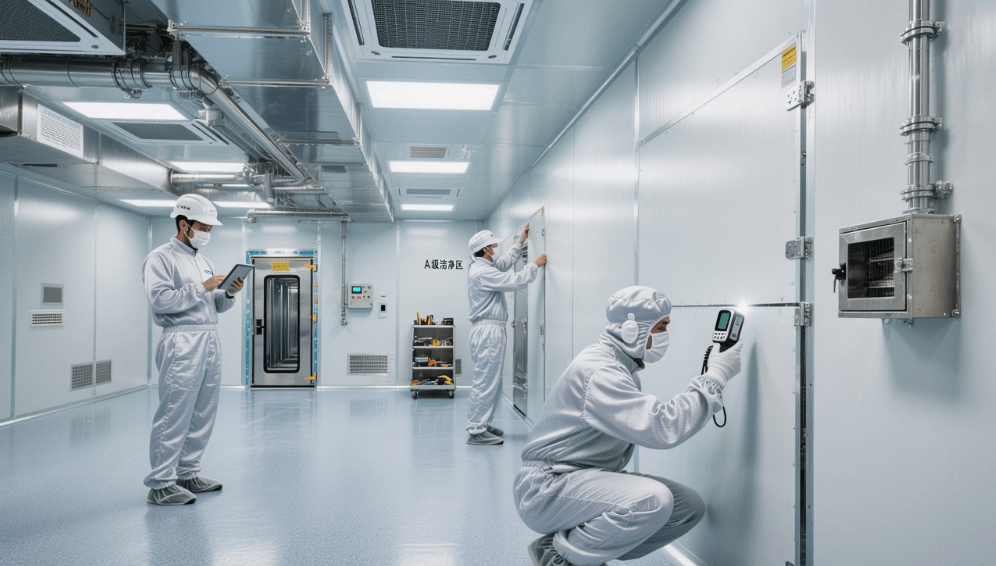
About Guangdong Keyao
Guangdong Keyao Purification M&E Engineering Co., Ltd. is a professional enterprise providing comprehensive cleanroom technology solutions and construction services for medical, high-tech, and R&D industries.
Core Advantages
- Established in 2012, 12 years deep in the cleanroom industry
- Complete professional qualifications and medical licenses
- Over 10 utility model patents and invention patents
- Guangdong Province "Contract-Honoring and Credit-Worthy" Enterprise
- Council member of Guangdong Cleanroom Industry Association
- Guangdong Cleanroom Industry "Excellent Construction Enterprise"
Service Areas
Medical Cleanrooms: Operating rooms, ICU, NICU, DSA, CCU, delivery rooms, radiology, laboratory, pathology, CSSD, IV preparation centers, hemodialysis centers, reproductive centers, negative pressure wards, fever clinics, etc.
Industrial Cleanrooms: Biopharmaceuticals, health products, electronics, optics, medical devices, food and cosmetics workshops
Laboratory Cleanrooms: Microbiology labs, PCR labs, animal facilities, physical and chemical labs, temperature and humidity controlled labs, various research and testing laboratories
Contact Us
Phone: 13929950401
Address: Room 706, Building A, Phase 5, Tianan Cyber Park, No. 1 Jianping Road, Guicheng Street, Nanhai District, Foshan City, Guangdong Province
This article is based on the "Construction and Acceptance Standard for Pharmaceutical Industrial Cleanrooms" (GB/TS1466-2025) and related specifications, for industry exchange and reference only. For specific project implementation, please refer to current national standards and consult professional technical personnel.
This article was compiled and published by the technical team of Guangdong Keyao Purification M&E Engineering Co., Ltd.