
Cleanroom Construction Guide: Flooring Materials — Epoxy Resin vs PVC Anti-Static Floor
How to choose cleanroom flooring? Keyao's 13-year engineering expertise breaks down the key differences between epoxy resin floors and PVC anti-static flooring to help you pass GMP inspection on the first try.
Cleanroom Construction Guide: Flooring Materials Explained
A must-read for factory owners planning construction! How do you choose cleanroom flooring? Epoxy resin or PVC anti-static floor — which is better? Keyao's 13-year engineering veterans break it all down. The floor is the "chassis" of your cleanroom — get it wrong at step one, and everything else goes wrong too.
The Core Question: Which Floor Is Right for Your Cleanroom?
Flooring selection is one of the most overlooked yet most mistake-prone aspects of cleanroom construction. On one side: a glossy, perfectly smooth epoxy resin floor. On the other: a premium medical-grade PVC anti-static floor. Two materials, two completely different use cases.
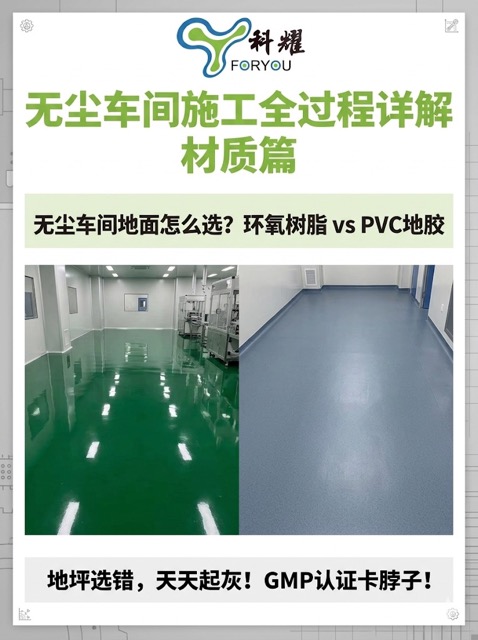
Wrong floor = constant dust. GMP certification becomes a bottleneck.
This isn't an exaggeration. Your flooring material directly affects cleanliness level, electrostatic protection, and chemical resistance — all of which determine your product pass rate and inspection outcome.
Why Does Your Workshop Keep Failing Inspection?
Many factory owners pour their budget and energy into HVAC purification systems and enclosure structures, only to stumble at the "last mile" — the floor.
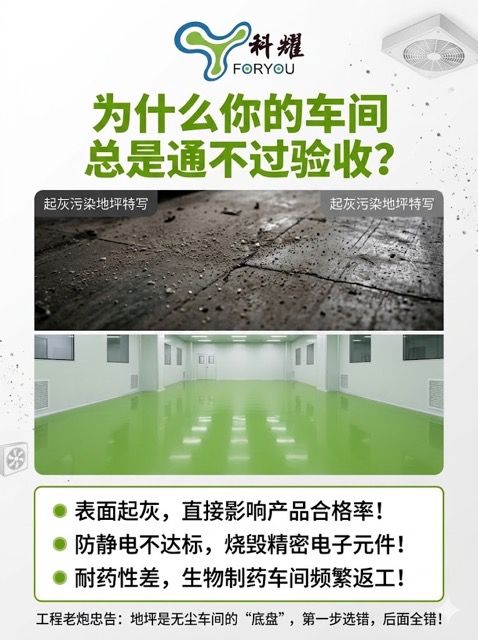
Poor flooring material selection leads directly to three major problems:
- Surface dusting ruins product pass rates. Under heavy equipment traffic and chemical exposure, ordinary floors powder and shed particles, causing product contamination and a sharp drop in yield.
- Inadequate anti-static performance destroys precision electronics. Electronics and semiconductor workshops are extremely sensitive to static. A single electrostatic discharge event from a non-compliant floor can cause tens of thousands in losses.
- Poor chemical resistance forces repeated rework in pharma workshops. Pharmaceutical facilities require frequent acid-alkali disinfectant cleaning. Floors with poor chemical resistance corrode and crack quickly, leading to constant rework.
Veteran engineer's advice: The floor is the "chassis" of your cleanroom. Get step one wrong, and everything else goes wrong.
Hard Data Comparison: One Table to Make the Right Choice
No fluff — straight to the numbers. Here's the core parameter comparison between epoxy resin floors and PVC anti-static flooring:
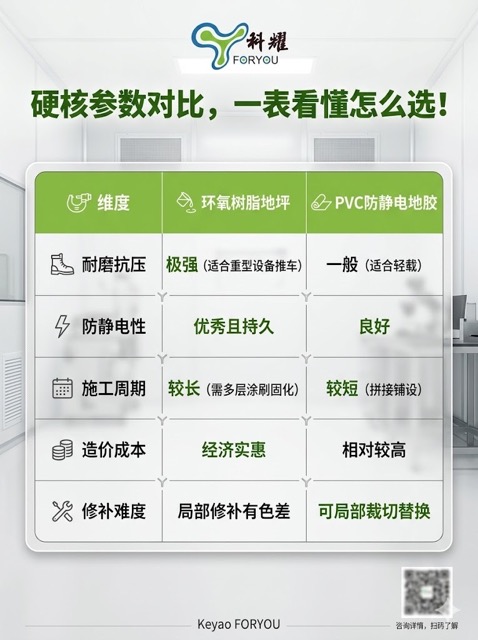
| Parameter | Epoxy Resin Floor | PVC Anti-Static Floor |
|---|---|---|
| Wear & Compression Resistance | Excellent (handles heavy equipment carts) | Moderate (suitable for light loads) |
| Anti-Static Performance | Excellent and long-lasting | Good |
| Installation Time | Longer (multi-layer coating and curing) | Shorter (interlocking installation) |
| Cost | More economical | Relatively higher |
| Repair Difficulty | Color variation in local repairs | Can be locally cut and replaced |
Both materials have their strengths and weaknesses. The key is matching the material to your industry requirements and usage scenario.
Different Industries, Different Choices
One size does not fit all. Cleanroom flooring requirements vary significantly across industries.
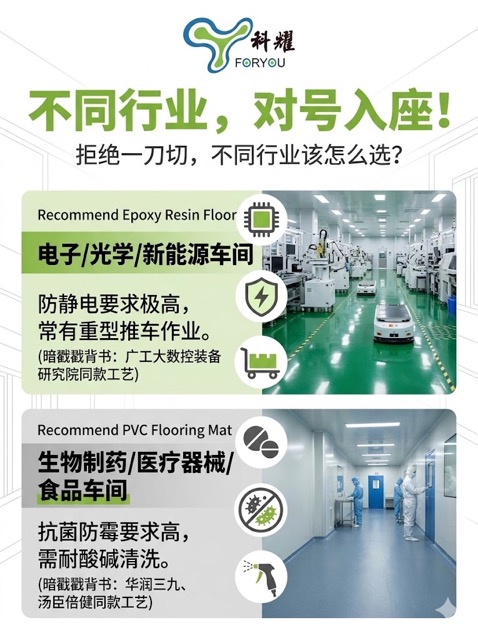
Recommended: Epoxy Resin Floor — Electronics / Optical / New Energy Workshops
These workshops have extremely high anti-static requirements and frequent heavy cart and forklift traffic, demanding exceptional wear and compression resistance. Epoxy resin's high hardness and durable anti-static performance make it the optimal choice for these environments.
Used by GDUT CNC Equipment Collaborative Innovation Institute, Inalfa Group, and more.
Recommended: PVC Anti-Static Floor — Biopharma / Medical Device / Food Workshops
These workshops require high antibacterial and mold-resistant performance, frequent acid-alkali disinfectant cleaning, and some degree of floor elasticity and comfort. PVC flooring's chemical resistance, antibacterial properties, and local replaceability perfectly match these needs.
Used by China Resources Sanjiu, By-Health, and other leading pharmaceutical enterprises.
Build Your Cleanroom with Someone Who "Knows the Full Picture and Delivers"
Choosing the right material is just the first step. Construction quality and project management are equally critical.
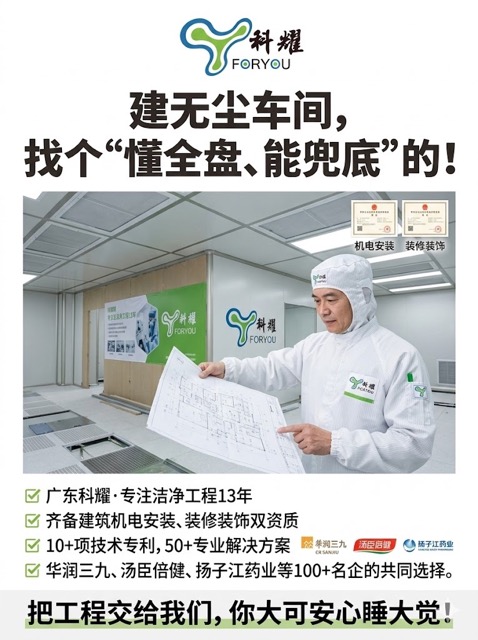
Guangdong Keyao — 13 Years Focused on Clean Engineering. We don't just advise on materials — we take full responsibility from design to final inspection:
- ✅ Dual qualifications: Building Electromechanical Installation + Decoration Engineering
- ✅ 10+ technical patents, 50+ professional solutions
- ✅ Trusted by 300+ leading enterprises including China Resources Sanjiu, By-Health, and Yangzijiang Pharmaceutical
- ✅ Council member of Guangdong Clean Room Association — solid industry credentials
Hand the project to us, and you can sleep soundly at night.
Planning Your Project? Worried About Scope Creep and Hidden Pitfalls?
The biggest fear in cleanroom construction is not thinking things through at the planning stage — leading to frequent change orders during construction, repeated rectifications during inspection, and ultimately going over budget and schedule.
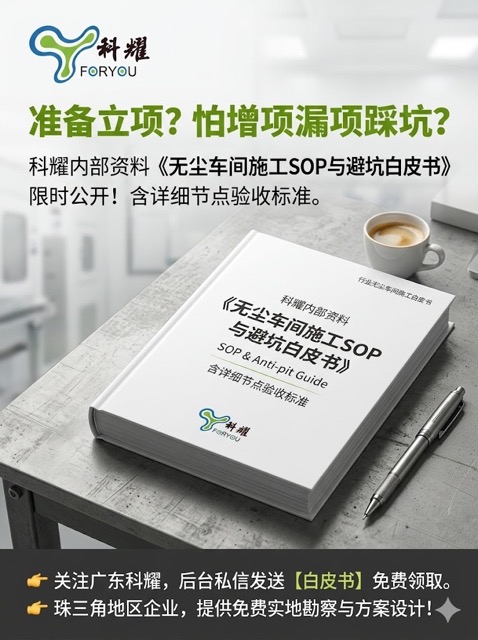
Keyao's internal document — "Cleanroom Construction SOP & Pitfall-Avoidance White Paper" — is now available for a limited time! It includes:
- Flooring material decision tree (easy to understand at a glance)
- Inspection checklist for each construction milestone
- Common change order traps and how to avoid them
- Cleanliness level reference table by industry
How to get it:
- 👉 Follow Guangdong Keyao on Douyin, send a DM with the keyword [White Paper] to receive it for free
- 👉 Enterprises in the Pearl River Delta region: free on-site survey and solution design available
Contact Us
Guangdong Keyao Purification & Electromechanical Engineering Co., Ltd.
- Expert Consultation Hotline: +86 13929950401
- Headquarters: Room 706, Building A, Phase 5, Tianan Digital City, No. 1 Jianping Road, Guicheng Street, Nanhai District, Foshan City, Guangdong Province, China
13 years focused on clean engineering. We provide optimal design solutions, first-class construction quality, and rapid after-sales service — helping enterprises achieve higher product quality and pass rates.
Cleanroom Electrical Layout Guide: Design Standards & Parameters from Class 100 to Class 100,000
Guangdong Keyao's 13-year cleanroom engineering expertise — complete electrical layout design standards, parameters, and construction best practices for GMP/ISO compliance.
Cleanroom Construction Guide: 3 Hidden Works That Can Ruin Your Entire Project
Guangdong Keyao's 13-year veteran engineers reveal the 3 most overlooked hidden works in cleanroom construction — duct insulation, panel joint sealing, and epoxy floor moisture barriers.